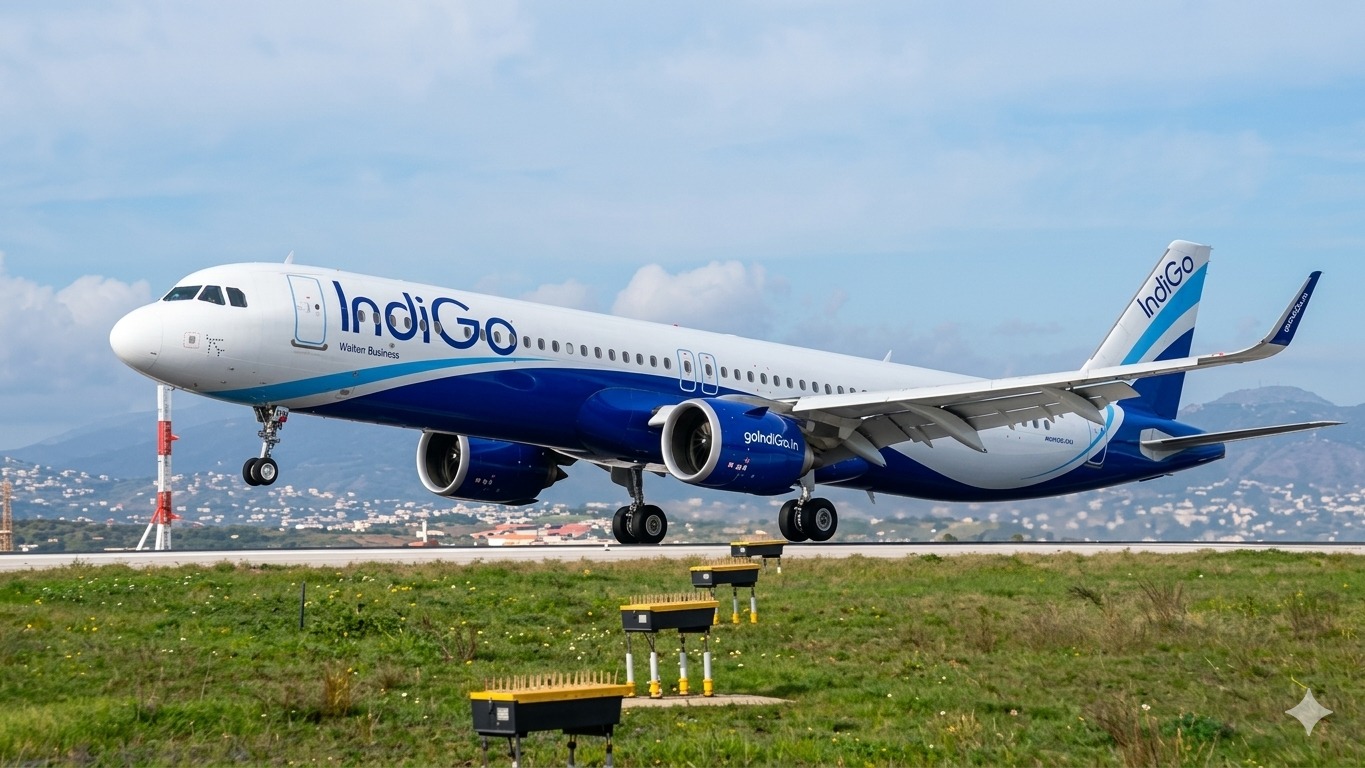
Flight Cuts by IndiGo and Air India in Peak Season Push Airfares Up Across India
Brief By Newsbrief / 6:27 PM on 29 May 2026
India’s aviation sector is witnessing major disruption during the peak travel season as two leading airlines, IndiGo and Air India, have started reducing their domestic flight operations. Since these airlines together dominate more than two-thirds of the domestic market, the impact has been immediately felt by passengers across major routes. The situation has become particularly visible at Delhi’s Indira Gandhi International Airport, one of the country’s busiest aviation hubs, where passengers are facing delays, cancellations, and reduced flight availability. With fewer flights operating, demand for remaining seats has surged sharply, making travel more difficult and expensive for flyers.
As flight availability has dropped, airfares have increased significantly across key routes. Travel portal data shows that last-minute and spot fares from Delhi have risen by nearly 20 to 30 percent in just a week. On the Delhi–Mumbai route, economy class tickets are now ranging between ₹12,000 and ₹16,000, while business class fares have crossed ₹50,000. Similarly, fares on Delhi–Bengaluru and Delhi–Chennai routes have reached ₹14,000 to ₹15,000 in economy class. Even shorter routes such as Delhi–Lucknow and Delhi–Patna are witnessing ticket prices rising above ₹7,500 to ₹9,000 during peak hours, putting additional pressure on travelers.
Despite the reduction in flights, passenger demand remains high, leading to almost full occupancy on most domestic flights operating from Delhi. The average load factor has crossed 90 percent, resulting in crowded terminals, longer queues at security checks, and busy boarding gates at IGI Airport. The situation is also affecting transit passengers from northern states like Punjab, Haryana, Rajasthan, and Himachal Pradesh, who rely heavily on Delhi as a connecting hub for domestic and international travel. Many passengers are now forced to choose connecting flights via Jaipur, Ahmedabad, or Hyderabad due to the unavailability or high cost of direct flights, increasing both travel time and expenses significantly.
With direct flights becoming scarce and expensive, passengers are increasingly dependent on connecting routes, leading to longer journeys of five to eight hours instead of the usual two-hour travel time on major routes like Delhi–Mumbai. Despite the inconvenience, travelers are paying higher fares due to last-minute bookings and limited options. The overall situation has disrupted travel budgets and increased pressure on India’s busiest airports during the peak season.