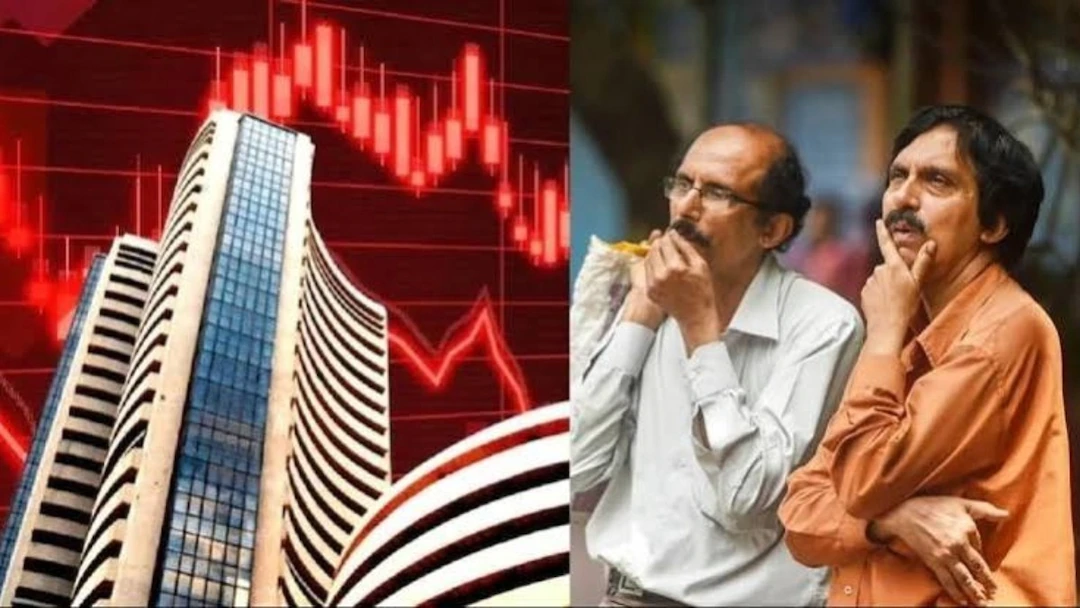
Stock Market Extends Losing Streak as Middle East Tensions Rattle Investor Sentiment
Brief By Newsbrief / 12:30 PM on 24 Jul 2026
Indian stock markets remained under pressure for the fourth straight trading session as investors reacted to escalating geopolitical tensions in the Middle East and a sharp rise in global crude oil prices. Despite positive cues from several Asian markets, both benchmark indices opened in negative territory on Thursday, reflecting cautious investor sentiment.
The BSE Sensex opened at 76,515, down from its previous close of 76,755, and slipped further to 76,344 within minutes of opening. Meanwhile, the NSE Nifty began trading at 23,904, compared to its previous close of 23,996, before declining further to 23,876 in early trade.
Selling pressure was visible across market segments. Among large-cap stocks, shares of IndiGo, HDFC Bank, SBI, and Bajaj Finance declined by more than one percent during early trading. Mid-cap stocks also witnessed broad-based weakness, with Hindustan Petroleum, GMR Airports, Phoenix Ltd, and Persistent Systems falling by around two percent.
Market participants attributed the continued decline primarily to rising geopolitical uncertainty in the Middle East. Concerns over the ongoing conflict, coupled with disruptions to global energy supply routes and attacks affecting shipping in the region, have significantly increased fears of higher inflation and slower global economic growth.
Adding to investor concerns, Brent crude oil prices climbed above $95 per barrel, raising expectations of higher fuel costs and inflationary pressures worldwide. Rising energy prices are likely to impact corporate earnings and increase input costs for several sectors, prompting investors to adopt a risk-averse approach.
With global uncertainties persisting and crude oil prices remaining elevated, analysts expect market volatility to continue in the near term. Investors will closely monitor developments in the Middle East, crude price movements, and global economic indicators for further direction in the equity markets.