Hormuz Tensions Threaten India’s Fertilizer Lifeline
Brief By Newsbrief / 3:06 PM on 03 Jun 2026
India is among the world’s leading producers of wheat and rice, but its agricultural success remains closely tied to imported fertilizers and essential raw materials. In 2024, India spent approximately $7.68 billion on fertilizer imports, making it the world’s third-largest fertilizer importer. While Russia accounted for around 21% of total imports, countries in West Asia—including Saudi Arabia, Oman, the UAE, Qatar, and Bahrain—collectively supplied nearly 37% of India’s fertilizer needs.
India imports not only finished fertilizers but also key inputs required for domestic production. Natural gas is essential for manufacturing urea and ammonia, while sulfur is a critical raw material for several other fertilizers. This makes West Asia strategically important not only for energy security but also for India’s agricultural sustainability.
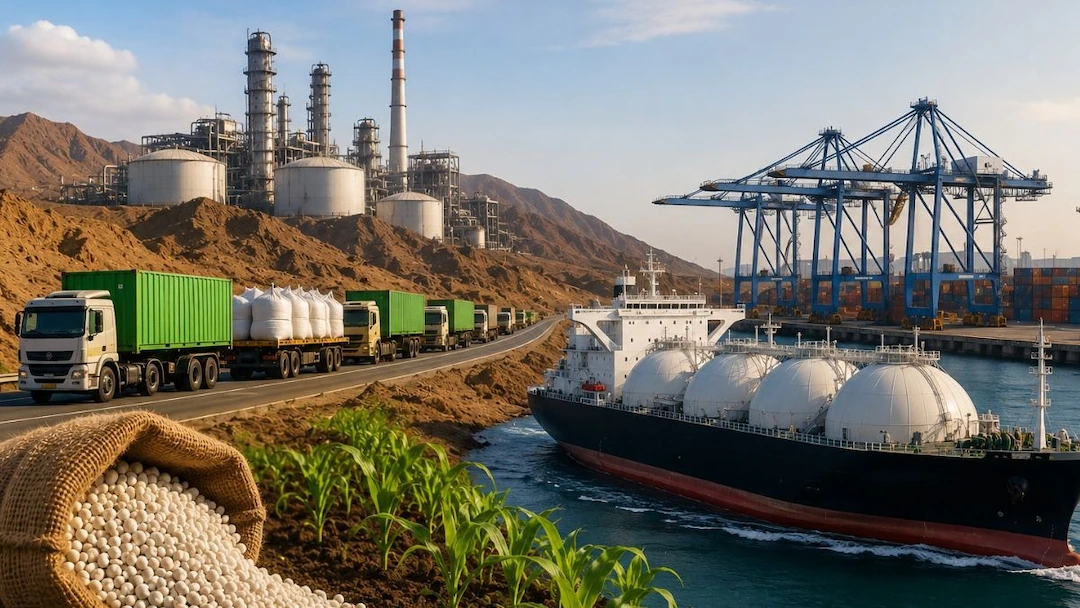
Recent geopolitical tensions involving the United States, Iran, and other regional actors have increased concerns over the security of the Strait of Hormuz, a vital maritime route for global fertilizer and LNG trade. A significant share of the world’s fertilizer shipments passes through this corridor. Rising tensions have slowed shipping movement, increased insurance costs, and disrupted supplies of ammonia, nitrogen, and sulfur-based products.
The impact has already been visible in global markets. Reports indicate that disruptions affecting Qatar’s QAFCO facility, one of the world’s largest single-site urea export complexes, contributed to a sharp increase in fertilizer prices, with urea prices rising by more than 60% within weeks.
To reduce dependence on the Strait of Hormuz, India has begun exploring alternative logistics routes. One option involves transporting fertilizer cargo through Gulf ports and then moving it overland across Saudi Arabia to the Red Sea port of Yanbu before shipping it to India.
Although the Indian government currently maintains adequate fertilizer stocks for the Kharif season, a prolonged crisis could significantly increase subsidy costs. With fertilizer demand exceeding 390 lakh metric tonnes, sustaining affordability amid rising global prices may become a major economic challenge.