Students Protest Suspension of Five Subjects at Godda College
Brief By Newsbrief / 10:58 AM on 26 May 2026
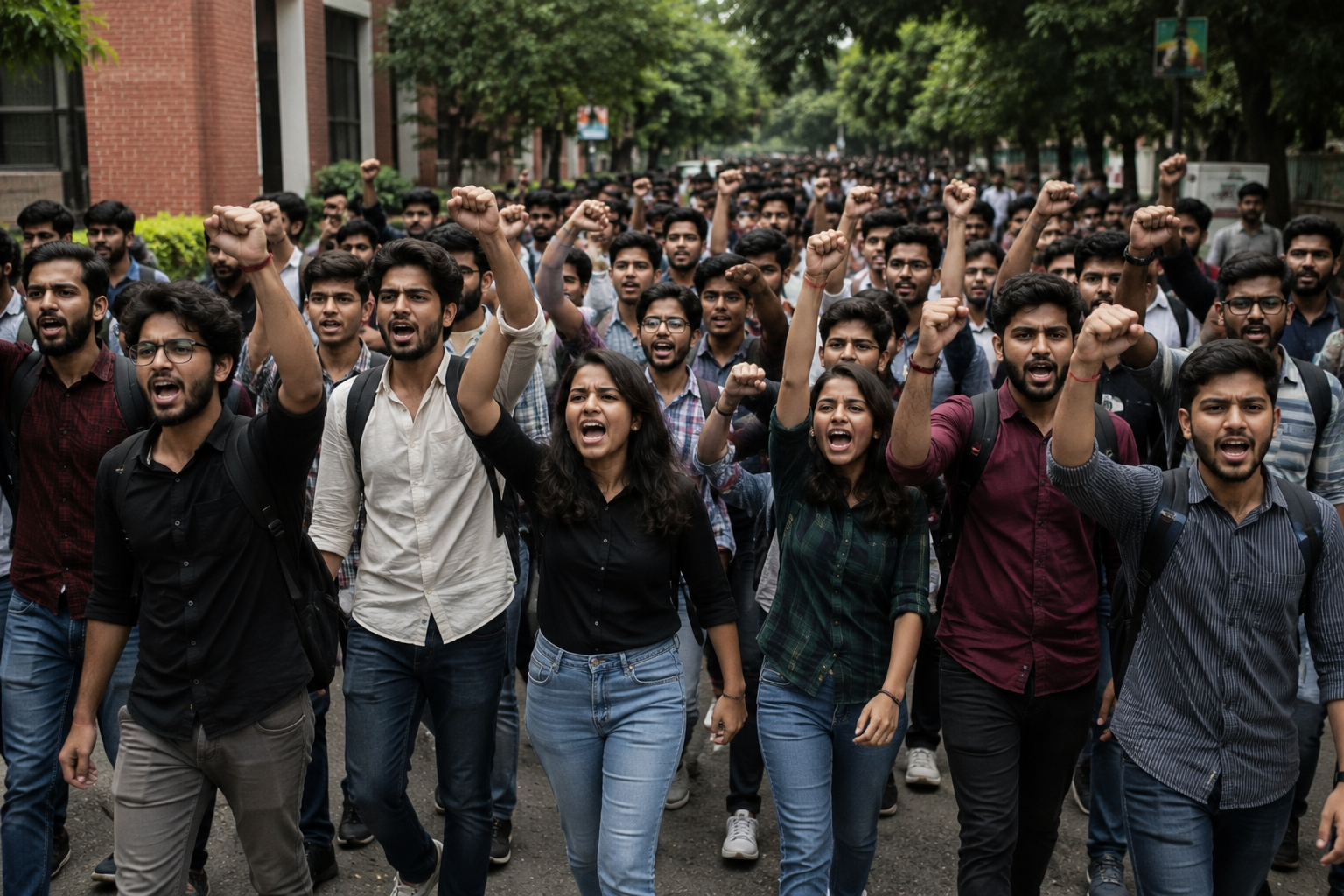
Students of Godda College have intensified their protest against the suspension of Urdu, Sociology, Anthropology, Philosophy, and Psychology courses at the institution. Demonstrations and sit-ins are continuing inside the college campus as students express anger over the decision taken by the Higher Education Department of Jharkhand under a restructuring exercise.
According to reports, the department temporarily halted teaching in these five subjects citing low student enrollment. However, students and faculty members argue that declining enrollment is not the only reason behind the situation. They claim the college has been facing a long-standing shortage of teachers, which has affected admissions and academic continuity.
Students also pointed out that many private and non-government colleges attract students by offering relaxed attendance and examination systems. In contrast, Godda College follows strict academic standards, including mandatory 75 percent attendance and disciplined examination procedures. According to protesting students, only genuinely serious learners continue their studies under such conditions.
The students argue that instead of weakening an institution known for quality education, the government should strengthen it further. Established in 1954, Godda College is considered one of the oldest and most respected educational institutions in the region. Over the decades, many students from the college have gone on to join administrative services, the legal profession, and other prestigious careers.
The college also offers postgraduate education, providing students access to libraries, research opportunities, and laboratory facilities. A professor from the Sociology Department stated that judging the value of academic subjects solely based on enrollment numbers sends the wrong message for the education system.
Teachers and students have jointly urged the government to reconsider the decision, warning that shutting down important social science and humanities subjects could negatively affect higher education opportunities for rural and economically weaker students in the region.